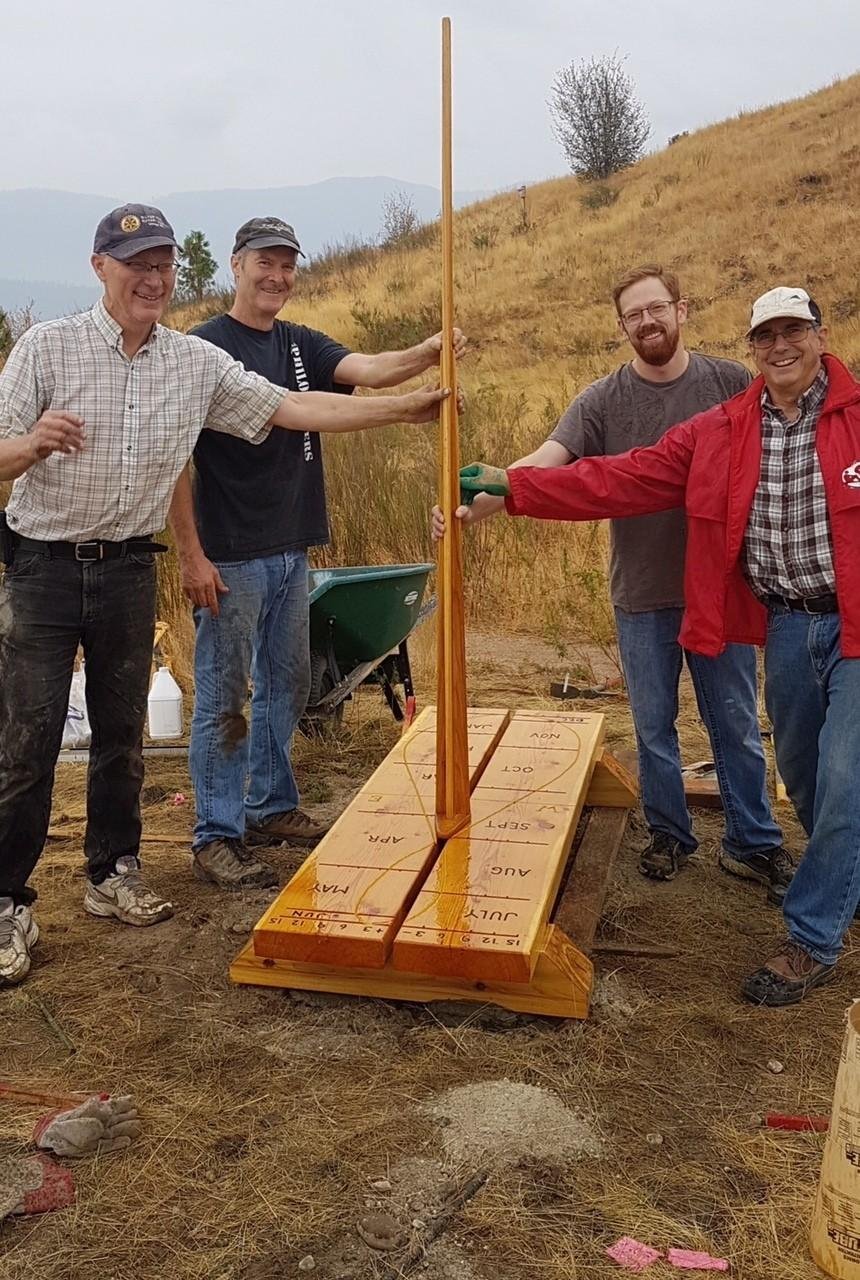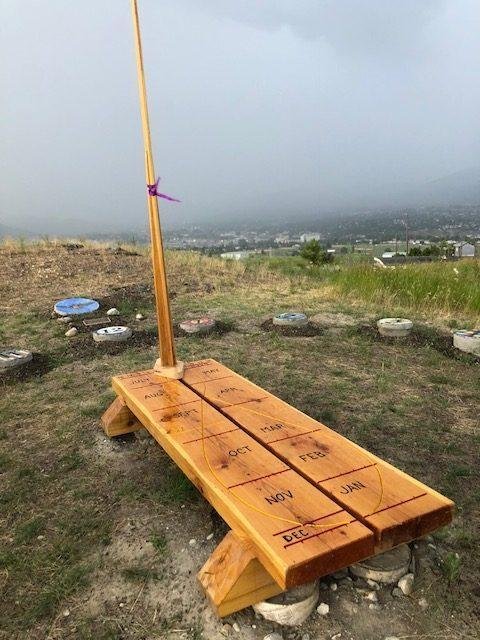
The Sundial was the first human invention that does not just keep time, it “finds” time. Up to the 1840s, the Sundial was used for the time finding standard for hour candles, hourglasses, water clocks, and even for mechanical watches and clocks and for church bells calling the hours of services. The parts of the Sundial are very simple: a stick called the gnomon and a dial showing hour lines.
As opposed to a normal sundial, an Analemmatic Sundial simply corrects for the motion of the Earth as it travels in an ellipse, not a circle, around the Sun speeding up and slowing down over the course of the year. A regular sundial at any location will run up to 16 min fast in the spring and 15 min slow in the fall because the Earth’ rotation speeds up in the spring and slows down in the fall. The Analemmatic Sundial standardizes the Solar mean time at any Earth location so that high noon, as the point of highest sun elevation, is really noon!
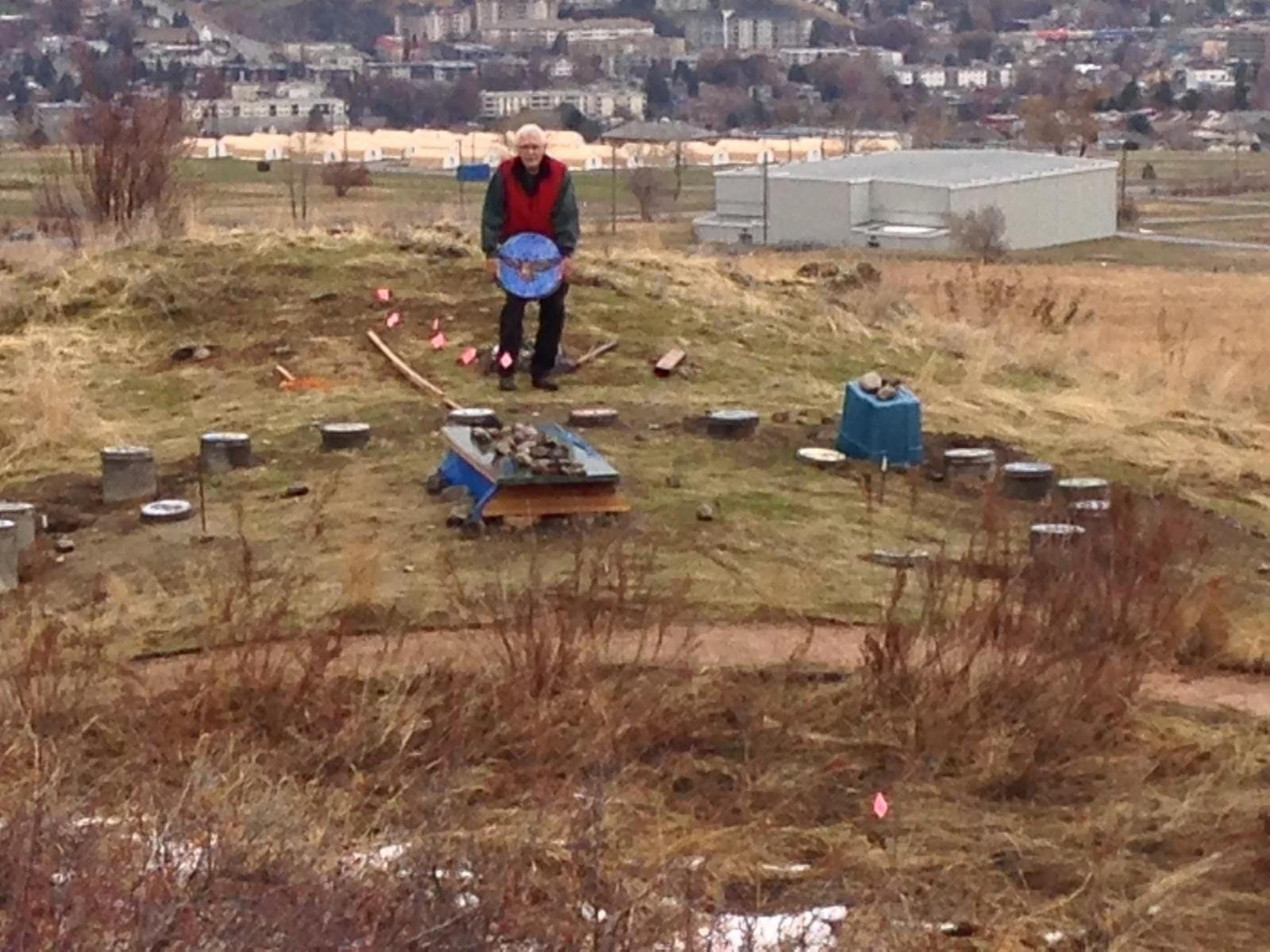
Check out the brand new Analemmatic Sundial at Allan Brooks Nature located on the Grassland Trail near the pond!
Click here for more information about the History of the Sundial